
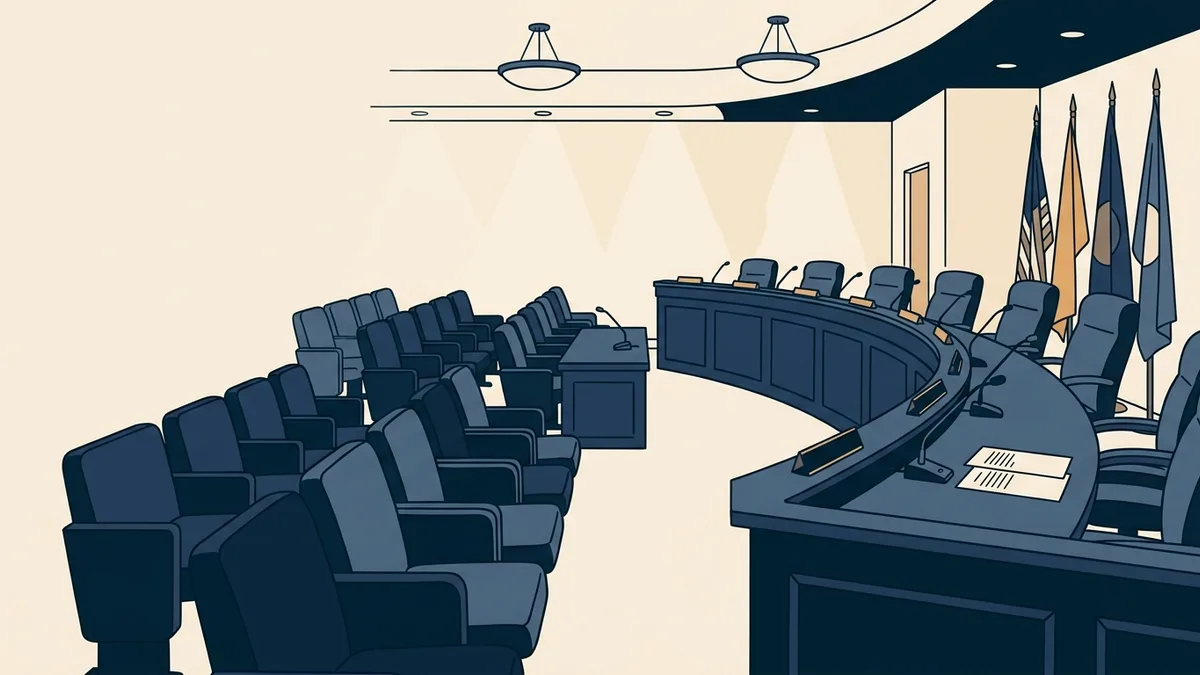
Each state licenses chiropractors through its own board, usually practicing DCs plus public members appointed by the governor. Texas has a standalone nine-member board; Florida's seven-member board sits inside the Department of Health; New York licenses through the State Education Department. Boards set rules, decide judgment calls and discipline. The FCLB and NBCE do not issue licenses.
Every state licenses chiropractors through its own board, created by its own practice act, and no national body issues or recognizes chiropractic licenses across states. Boards are mostly practicing chiropractors plus public members, appointed by the governor. They adopt rules, decide applications that need judgment, and discipline licensees. Day-to-day application review is usually done by staff, often in a larger state agency. Knowing which part of the structure is handling your file explains a lot about how it moves.
Who sits on a chiropractic board?
Two examples from statute:
- Texas. The Texas Board of Chiropractic Examiners has nine members appointed by the governor with Senate consent: six practicing chiropractors who have lived in Texas at least five years, and three public members (Tex. Occ. Code § 201.051). Terms are staggered six-year terms, with one-third expiring February 1 of each odd-numbered year, and no one may serve more than two terms (§ 201.054).
- Florida. The Board of Chiropractic Medicine sits within the Department of Health and has seven members appointed by the governor and confirmed by the Senate. Five must be Florida-resident chiropractic physicians with at least four years in practice; two must never have been chiropractors or members of a closely related profession; and at least one member must be 60 or older. Terms are four years (Fla. Stat. § 460.404).
Standalone board or umbrella agency?
This is the structural difference that most affects applicants:
- Standalone. Texas's board is its own agency and writes its own licensing rules and fee schedule (22 Tex. Admin. Code chapter 72). It is also subject to the Texas Sunset Act and will be abolished on September 1, 2033 unless the legislature continues it (Tex. Occ. Code § 201.004).
- Inside a health department. Florida's board operates within the Department of Health, and the general health-professions chapter (Fla. Stat. chapter 456) applies alongside the chiropractic act. The board certifies that an applicant is eligible; the department examines and licenses (Fla. Stat. § 460.406). Statewide rules such as the 30-day error notice and 90-day decision deadline in Fla. Stat. § 120.60 apply to every license.
- Inside an education department. New York licenses chiropractors through the State Education Department's Office of the Professions, under Education Law Article 132 and Part 73 of the Commissioner's Regulations. The NYSED chiropractic requirements page refers to the New York State Board for Chiropractic and, for some individual education cases, to approval by the Board of Regents.
In an umbrella structure, your application may be reviewed by staff who handle several professions, and questions that need a judgment go to the board's next meeting.
What do boards actually decide?
- Rules. Exam requirements, passing scores, CE hours, fees, and the details of endorsement routes are mostly set by board rule within the statute. That is why the same statute can produce different requirements over time.
- Applications that need judgment. Discretionary calls such as Florida's option to require SPEC for a degree over 10 years old (Fla. Stat. § 460.406(1)), whether a past discipline matter was "corrected and resolved" in Arizona, or a good-cause waiver for a Texas license expired one to three years.
- Discipline. Complaints, investigations, and orders against licensees. Those orders are what the FCLB's CIN-BAD databank and the federal NPDB collect.
- CE approval. Many boards approve courses or sponsors; Texas charges $100 for continuing education course approval (22 Tex. Admin. Code § 72.1).
Where do the FCLB and NBCE fit?
Neither issues licenses.
- The Federation of Chiropractic Licensing Boards (FCLB) is a federation of the boards, with the stated mission to "protect the public by promoting excellence in chiropractic regulation through service to our member boards." It runs services the boards use, including the CIN-BAD disciplinary databank, PACE (Providers of Approved Continuing Education), and an official directory of board requirements. See the CIN-BAD report.
- The National Board of Chiropractic Examiners (NBCE) is a testing organization. It says plainly that it "does not license/certify chiropractors"; state boards review scores and other documents and issue the license. It also delivers some state exams, such as Florida's Laws and Rules exam and Oklahoma's jurisprudence exam.
There is no interstate chiropractic compact and no national chiropractic license. See our portability hub and why there is no chiropractic compact.
What does this mean for an applicant?
- Read the rule, not just the statute. The details live in the administrative code, and they change.
- Know the meeting calendar. A file that needs a board decision waits for a meeting.
- Answer staff questions fast. Most delays are deficiency letters, not board deliberation.
- Treat the board as the only authority. We, and any other service, can prepare and track a file, but only the board decides it.
We are not affiliated with any state board, the FCLB or the NBCE. Our Chiropractic Licensure Readiness Review ($149) tells you which rules apply in your target state, and our License by Endorsement ($499 per state) and Full State License Application ($749 per state) run the file. Each state's board and its current requirements are listed in our state license index.
Common questions
- Who appoints chiropractic board members?
- Usually the governor. In Texas, the governor appoints nine members with Senate consent; in Florida, seven members appointed by the governor and confirmed by the Senate.
- Does the NBCE issue chiropractic licenses?
- No. The NBCE is a testing organization and says it does not license or certify chiropractors. State boards issue licenses.
- What is the FCLB?
- The Federation of Chiropractic Licensing Boards, a federation of state boards that runs shared services such as the CIN-BAD disciplinary databank, PACE continuing education approval and a directory of board requirements.
- Why does my application need to wait for a board meeting?
- Files that need a judgment, such as a disclosure, an old degree or a long inactive period, are decided by the board itself rather than staff, so they wait for the next meeting.
Need Help with Your Application?
We handle the chiropractic licensing process end-to-end — eligibility screening, documents, board follow-ups, and tracking.