
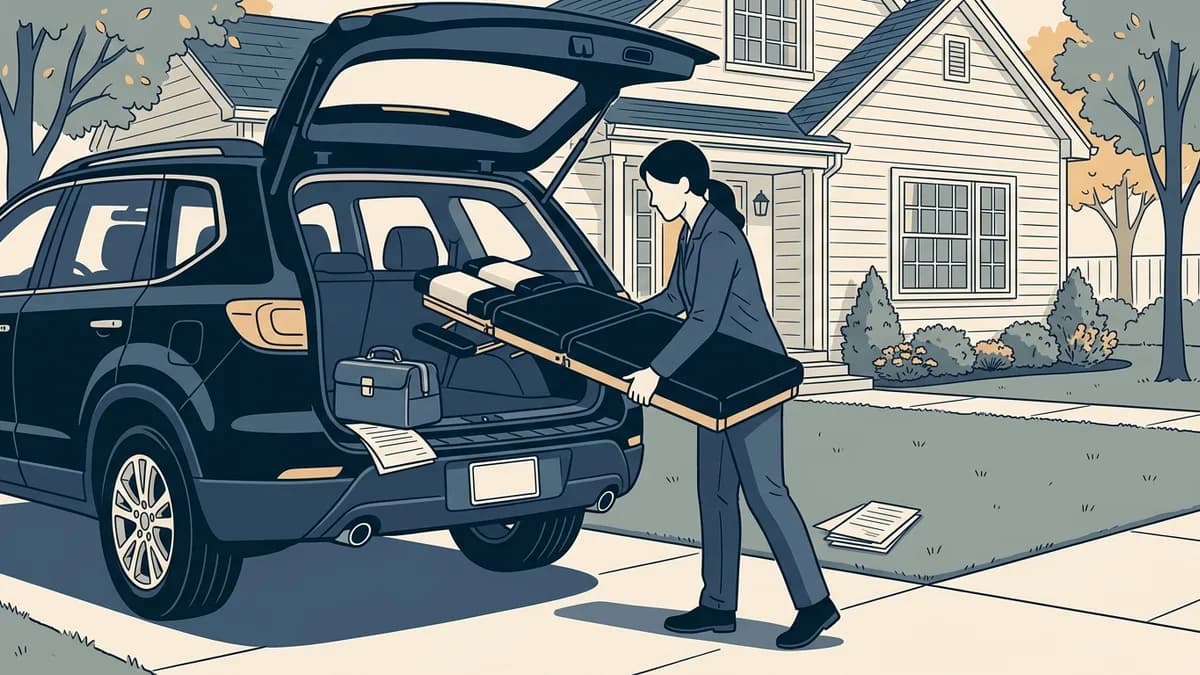
Mobile and concierge chiropractors need a license in every state where they treat a patient; there is no mobile license or compact. Some boards add location rules: Texas requires mobile-only DCs to document each patient address and service dates, keep secondary-location records six years, and display the license and public notice wherever they practice.
Mobile and concierge chiropractors are licensed exactly like clinic-based DCs: you need a license in the state where the patient is when you treat them. There is no separate mobile license and no chiropractic compact, so a practice that visits homes, offices or events on both sides of a state line needs a license in each state. What differs is the location paperwork. Some boards have rules for practices with no fixed clinic, and Texas spells them out in detail.
What does Texas require of a mobile practice?
The Texas Board of Chiropractic Examiners' place-of-business rule, 22 Tex. Admin. Code § 75.2, distinguishes several setups:
- Mobile-only practice at patients' homes. A licensee operating only a mobile practice that provides services at a patient's residence must document the physical address of each location and the date range when services were provided (§ 75.2(d), referring to (b)(1) and (3)).
- Secondary locations generally. For each secondary location, a licensee documents the address, the business name if any, and the dates of service, keeps that record for six years, and gives it to the board on request (§ 75.2(b), (f), (g)).
- Practice from your own home. A licensee providing services from his or her residence must post all of the board's mandatory notices to the public and protect patient safety, privacy and health information (§ 75.2(c)).
- Screenings at temporary locations. A licensee conducting spinal screenings at a temporary location must also display all required disclosures (§ 75.2(e)).
Display rules follow you too. The license, or a visible copy at a non-primary location, must be displayed at every location where you provide services (§ 75.7), and the board's notice to the public must be visible at secondary locations (§ 75.6). Keep a copy of the license and the notice in the kit you carry. Address, phone and email changes go to the board within 30 days (§ 72.13).
Which rules should I check in other states?
Most chiropractic practice acts were written with a clinic in mind. Before taking a mobile practice into a new state, check:
- Location or registration rules. Whether the board requires a registered practice address, notice of each practice location, or a business registration. Alabama, for instance, requires a DC's license to be recorded with the probate judge in the county where the DC practices, with proof sent to the board, which raises a question for a practice that works across counties.
- Display and notice rules, as in Texas.
- Records custody. Who holds the records when there is no office, and how patients reach them. Texas's closing-a-practice rule (§ 75.9) assumes someone is named to maintain records.
- Equipment. A portable table raises no licensing issue, but a mobile x-ray unit is a radiation machine with its own state registration. See x-ray rules.
- Assistants. Several states require a DC to be on the premises while assistants work, which limits how a mobile team can split up. See assistant rules by state.
Can I treat a patient across the state line on a temporary permit?
Usually not for an ongoing practice. Temporary permits are narrow by design. Texas's temporary license covers no more than 30 days a year and excludes care to the general public (22 Tex. Admin. Code § 72.15). Nevada's covers up to 10 days at a named location, twice a year, and Alaska's courtesy license covers a single special event. Those suit events and teams, not regular house calls. For a concierge practice near a border, the answer is a second license; see endorsement or the exam route to judge which path fits.
What about video check-ins between visits?
Many concierge practices pair house calls with phone or video follow-ups. Those are telehealth, and the same patient-location rule applies: a check-in with a member who is traveling in another state is practice in that state. Texas requires written informed consent before its licensees provide chiropractic telehealth and access to the license and public notice in each session (22 Tex. Admin. Code § 75.10). Florida and Arizona offer out-of-state telehealth registrations that reach chiropractors. Details in telehealth for chiropractors.
Does a concierge or cash model change the licensing?
No. Membership pricing, cash payment and declining insurance are business decisions; the board's license, CE and conduct rules apply exactly as they do to any practice. Payer rules for practices that do or do not bill insurance are outside licensing; White Glove Credentialing handles enrollment questions.
Our License by Endorsement ($499 per state) and Full State License Application ($749 per state) services cover the license in each state you serve, and Annual Renewal & CE Compliance ($299 per license, per year) keeps the renewals, address updates and CE on schedule. Board fees are extra.
Common questions
- Do I need a license in each state I make house calls in?
- Yes. The license is required where the patient is treated. A temporary permit, where one exists, is limited to short periods or events and is not a basis for regular house calls.
- What records does a Texas mobile chiropractor keep?
- Under 22 TAC 75.2, a mobile-only practice documents the physical address of each patient location and the dates services were provided, keeps the records for six years, and provides them to the board on request.
- Do I have to display my license on a house call?
- In Texas, the license or a visible copy must be displayed at every location where you provide services, along with the board's notice to the public. Carry copies of both.
Need Help with Your Application?
We handle the chiropractic licensing process end-to-end — eligibility screening, documents, board follow-ups, and tracking.